The Future of Personalized Customer Journey in SaaS
Introduction
Customers today want software that feels personal. They want messages and guidance that match their needs. But many SaaS companies still use the same experience for everyone, and this approach does not meet customer expectations. Personalizing the customer journey can improve engagement. It can also reduce churn and increase satisfaction. This blog explains the problems with ordinary customer journeys and shows simple steps to create a personalized experience for SaaS users.
Problems with Ordinary Customer Journeys
Many SaaS product companies treat every user in the same way, which creates several problems. Customer data is often stored in different systems. Product usage, support requests, and marketing data are separate. And CRM records are also stored in another system. So, teams can’t understand each customer fully.
Users also often receive messages that are not relevant. They may get emails, notifications, or promotions that do not match their role or needs. This reduces engagement and can frustrate customers. New users struggle to see value this way. Generic onboarding does not show them how to use the product effectively, which lowers activation rates.
Teams miss key moments in the customer lifecycle, too. They do not know when a user adopts a new feature, so they are unaware when a user is ready to expand or at risk of leaving. Manual segmentation is another problem. Teams spend time creating static lists, which become outdated quickly. Finally, limited visibility makes it hard to track customer journeys. Teams can’t see how users move from one stage to another.
How to Personalize the Customer Journey
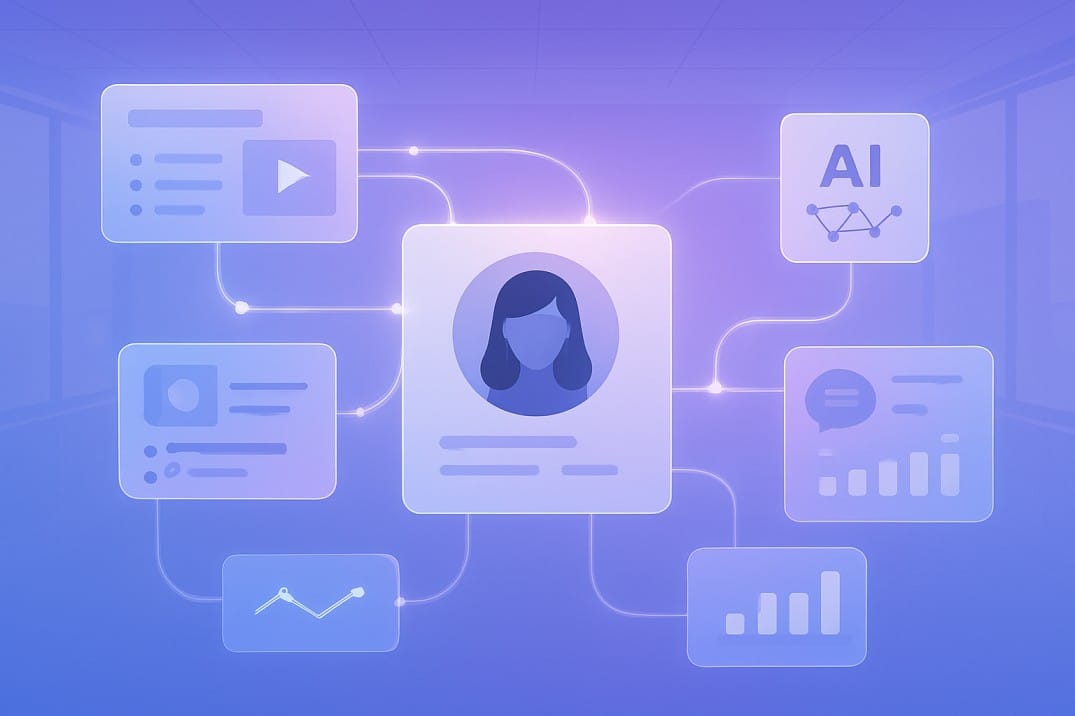
To give each user the right experience, companies need a clear plan. The following steps explain how to make customer journeys more personal and effective.
How to Personalize the Customer Journey
Collect Unified Customer Data
The first step is to bring all customer data into one place. Most companies store data in separate systems. But when information is scattered like this, teams can’t see the full picture of each user. They can’t understand client needs or preferences accurately. A unified customer data platform solves this problem. It combines product, marketing, support, and CRM data. This gives teams a complete view of every customer. Teams can see which features users try and how they engage with the product. They can also track which messages or campaigns the user has received.
Further, unified data allows companies to respond faster. A single system also prevents mistakes. When data is separated, teams may make wrong assumptions about users. But with one hub, all teams see the same information and work with the same accurate data. It enables automation, too, which reduces manual work.
Segment Users with AI
After collecting data, companies need to segment users. Segmentation divides users into groups based on behavior, engagement, or needs. Traditional segmentation is often manual, and teams create lists based on simple factors like location or plan type.
Manual lists become outdated quickly and do not reflect actual user behavior. AI can solve this problem. It looks at user activity automatically and checks which features users use. It also tracks engagement and patterns over time. AI creates dynamic segments which change as user behavior changes. This lets teams target each group with relevant guidance.
Dynamic segmentation also saves time since teams no longer need to update lists manually. Segments adjust automatically in real-time. This keeps communication accurate and relevant. Segmentation even improves personalization across the journey. New users can get onboarding guidance, and active users can get advanced tips.
Send Real-time Personalized Messages
Once users are segmented, companies can send messages at the right time. Timing is very important, since messages sent at the wrong time may be ignored. Real-time messages are more effective than scheduled messages.
Real-time messages are triggered by actions, and users can receive relevant guidance immediately. Messages can be delivered through email, notifications, or chat messages. The right channel depends on the user and context. Personalized messages make users feel understood, which improves retention. Users who receive timely guidance stay active and adopt new features faster. These customers are more likely to upgrade their plans.
To use real-time messaging successfully, companies need a unified data hub and AI-based segmentation. Without these, messages may be irrelevant and would frustrate users. Real-time messaging also allows companies to test what works best. They can try different types of messages for different groups. They can measure engagement and refine the approach. This ensures continuous improvement.
Personalize Onboarding
Personalization can be based on role or use case. Onboarding can include guided walkthroughs and adjust based on user behavior. If a user finishes steps quickly, they can be shown advanced tips. Or if they struggle, they can receive extra guidance. This helps improve satisfaction and reduce churn.
Personalized onboarding also prepares users for future engagement. Users who have a good start are more likely to respond to messages and updates. They also adopt new features faster. Onboarding can be improved continuously, where teams track which steps users struggle with. This ensures that every user gets the best experience possible.
Track the Full Customer Lifecycle
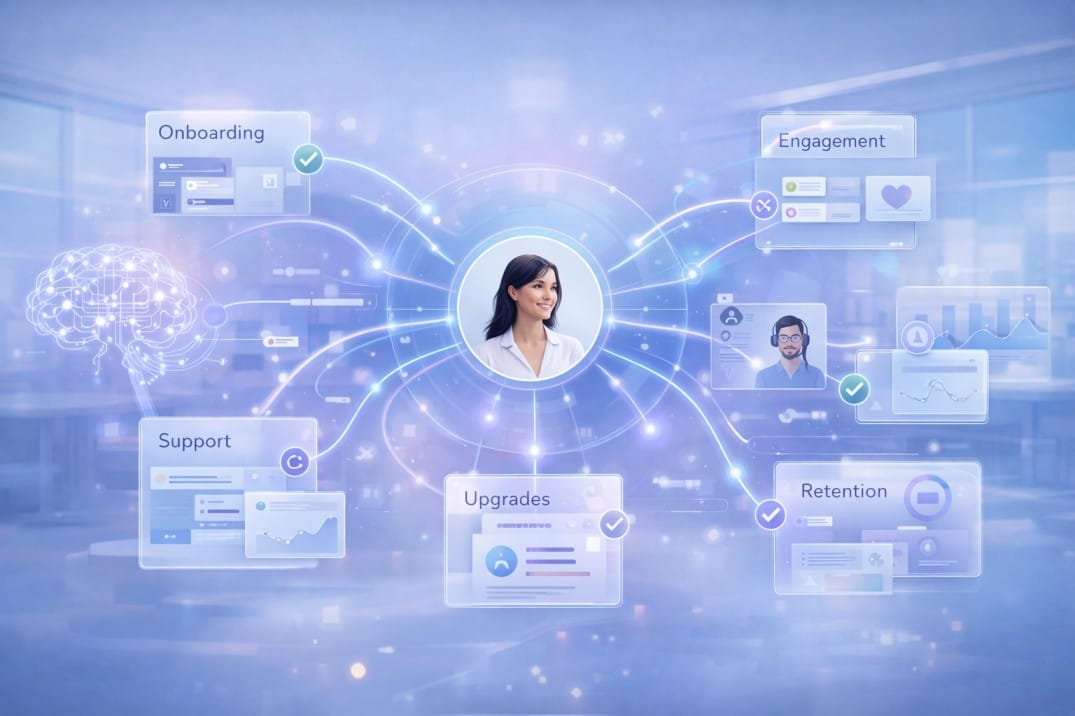
Many companies only track one or two stages of the customer lifecycle. This gives a limited view of customer behavior. The full lifecycle includes acquisition, activation, engagement, retention, expansion, and churn risk. Companies need a system that tracks all stages.
Tracking the full journey helps teams act proactively. If a user is at risk of leaving, a message or support action can be sent. If they are ready to expand, a targeted offer can be delivered. Tracking also measures the impact of personalization. Teams can see which actions increase engagement, retention, and revenue. This data allows teams to improve their approach. A full view also improves team collaboration. Everyone can access the same information, and teams can coordinate actions and avoid duplicate work.
Connect Teams for Better Collaboration
Personalization requires teamwork. Marketing, product, and support teams must share information and work together. Connected teams like these ensure everyone knows the user’s needs and current stage.
Marketing can send messages that match product activity, support can provide help that aligns with onboarding, and product teams can prioritize features based on real data. Connected teams also reduce mistakes. Users do not receive conflicting messages, and communication is consistent. This creates smooth customer experiences.
Optimize the Journey Continuously
Companies must continually improve their customer journeys, since users’ needs and behaviour change. Continuous optimization relies on data. Teams can measure engagement, activation, retention, and revenue, and can see which actions are successful. They can also see which needs improvement.
Optimization includes updating segments. It also includes adjusting messages and improving onboarding. Teams can test new approaches and make improvements. Continuous optimization ensures users always get relevant and timely experiences, which reduces churn and increases lifetime value.
Conclusion
Personalizing the customer journey is very important for SaaS companies. If you follow practices like collecting unified data, sending real-time messages, and optimizing continuously, your agency can improve engagement. These steps help retain customers longer and improve their experience. It also helps SaaS companies grow and succeed in a competitive market.