Why Integrated CRM + Marketing Tools Outperform Standalone Systems
Table of Contents 1. Introduction 2. What Is an Integrated CRM + Marketing System? 3. Why Standalone Tools Cause Problems 4. Benefits of an Integrated System 1. Unified Customer Data in One Place 2. B...
Introduction
Have you ever noticed that some sales leads just seem to vanish? Or your marketing campaigns don’t get the results you were hoping for? Many times, the trouble starts because the tools being used don’t connect with each other. When sales, marketing, and customer data are kept in separate apps, work isn't effective. Leads get missed, and understanding your customers becomes quite hard.
An integrated CRM and marketing system solves this by bringing all customer and marketing information into one place. With everyone working from the same data, teams can respond faster and improve sales results. In this blog, we’ll explore how integrated CRM and marketing tools can help businesses increase conversions and improve sales.
What Is an Integrated CRM + Marketing System?
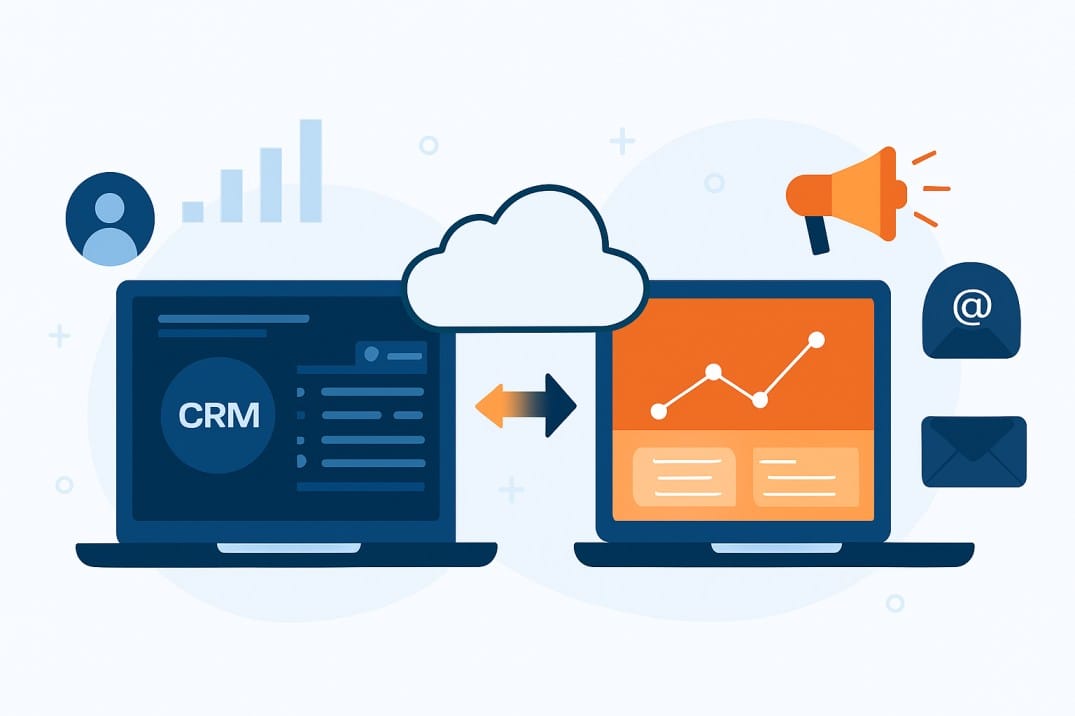
An integrated CRM and marketing system is a single platform that connects sales and marketing tools. Instead of using separate apps, all customer data and campaign activity are managed in one place. Both sales and marketing teams can see the same information and track customer actions. They can also follow up at the right time. This helps teams stay organized and make better decisions.
Why Standalone Tools Cause Problems
When different tools are used for emails, lead forms, and sales tracking, information gets scattered. A lead may sign up in one tool, but the sales team won’t see it right away because the CRM is separate. And marketing may know which campaigns are getting clicks, but not which leads actually turn into customers. Sales may know who converted, but not what campaign brought them in. This makes it harder for teams to work together. People spend time switching between apps and trying to match information. Reports also become unclear, and follow-ups get delayed. Important leads get lost, too.
Benefits of an Integrated CRM and Marketing System
Benefits of an Integrated CRM and Marketing System
An integrated CRM and marketing system brings everything into one place. This gives businesses an easier way to manage customers and campaigns. Here’s how it helps:
Unified Customer Data in One Place
All customer and marketing data is kept in a single place with this method. This removes silos and makes sure everyone has access to all the data related to the project. It lets teams understand every action the customer has made so far, so they know what they need next. Marketing and sales can create personalized messages for customers so they take another action. This increases customer satisfaction and trust. Also, all team members do not get confused and make mistakes since all the data can be obtained from the same place. They can quickly notice patterns and make decisions without waiting for data from different tools, too. This increases efficiency and helps generate more leads.
In addition to this, having data in one place saves a lot of daily effort. Team members do not waste time switching between tools to find basic information. When customer details are easy to access, responses become faster and more relevant. Customers feel valued when teams already know their history and do not ask the same questions again.
Better Teamwork Between Sales and Marketing
Both teams can see the same customer activity, leads, and campaign details. This improves teamwork and gives better results. They also have accurate information, which helps them adjust strategies and improve performance. Additionally, marketing does not need to manually pass leads to sales, and sales does not waste time following unclear leads. Sales can even contact new leads as soon as they come in, which increases the chance of making a sale.
This shared way of working removes confusion and delays. Sales teams know exactly where leads come from and what messages they have already seen. Marketing teams understand which leads turn into customers and which do not. This helps both teams learn from each other and improve future efforts.
Automatic Sync Between CRM and Marketing Campaigns
Leads from ads or email sign-ups appear in the CRM without anyone entering them manually. This saves time and reduces mistakes. Sales teams also see new leads right away, so they can respond quickly. Apart from that, marketing work updates the sales system automatically, so sales and marketing always have the same information. Also, everyone sees the latest data, so decisions are more accurate.
This automatic flow of data keeps everything running smoothly. Teams do not have to check multiple systems to confirm if information is updated. This also helps managers track performance more easily and understand which campaigns bring the most value to the business.
Faster and Smoother Lead Handoff
Leads are given to sales reps based on engagement or lead score, without manual work. Sales can contact leads at the best possible moment, especially when they are most interested. Marketing and sales also stay connected because leads move easily between both teams. And they can make responses faster, which increases the likelihood of turning leads into customers.
This smooth process prevents leads from being ignored or delayed. Customers feel acknowledged when they receive quick responses. Sales teams can focus their energy on people who are more likely to convert instead of spending time on low-interest leads. This improves success rates and helps teams close deals faster.
Shared Dashboard for Clear Insights
Teams can see campaign results, customer activity, and sales performance instantly. With real-time data, teams can adjust messaging or strategies quickly. Moreover, since everyone sees the same numbers, reports are consistent and reliable. Trends and issues are also noticed earlier, so the business can respond right away.
A shared dashboard also helps leadership understand overall performance without asking for separate reports. Teams stay informed about progress and goals. This increases their confidence and helps everyone stay focused on the important work.
Lower Costs and Higher Efficiency
One system reduces the number of subscriptions and integrations. Teams save hours because they do not have to move data between systems. Everything also connects better, so the work takes less time and has fewer errors. Teams can even spend time on customers, strategy, and results instead of fixing tool problems.
Over time, this simpler setup lowers operating costs and reduces technical issues. Fewer tools mean less training and fewer system problems. Teams work faster and feel less stressed, which improves overall productivity.
More Consistent Customer Experience
Customers receive consistent messaging whether they interact through email, ads, or sales calls. Teams can contact customers at the right moment, which keeps them more engaged. Teams can also tailor messages based on what the customer actually does. Besides that, when customers get clear and helpful communication, they trust the brand more.
A consistent experience makes customers feel comfortable and confident. They know what to expect at every stage. This builds stronger relationships and increases the chance that customers return.
Conclusion
When sales and marketing work from the same system, everyday work becomes much easier. Having all customer information in one place helps teams work better together. Leads are handled faster, and campaigns run more smoothly. Customers also get a better experience, which increases loyalty. Using one system saves time and reduces mistakes. It also helps businesses grow by improving sales and customer relationships.