
How a Chatbot Assistant Can Increase Sales and Conversions
Introduction
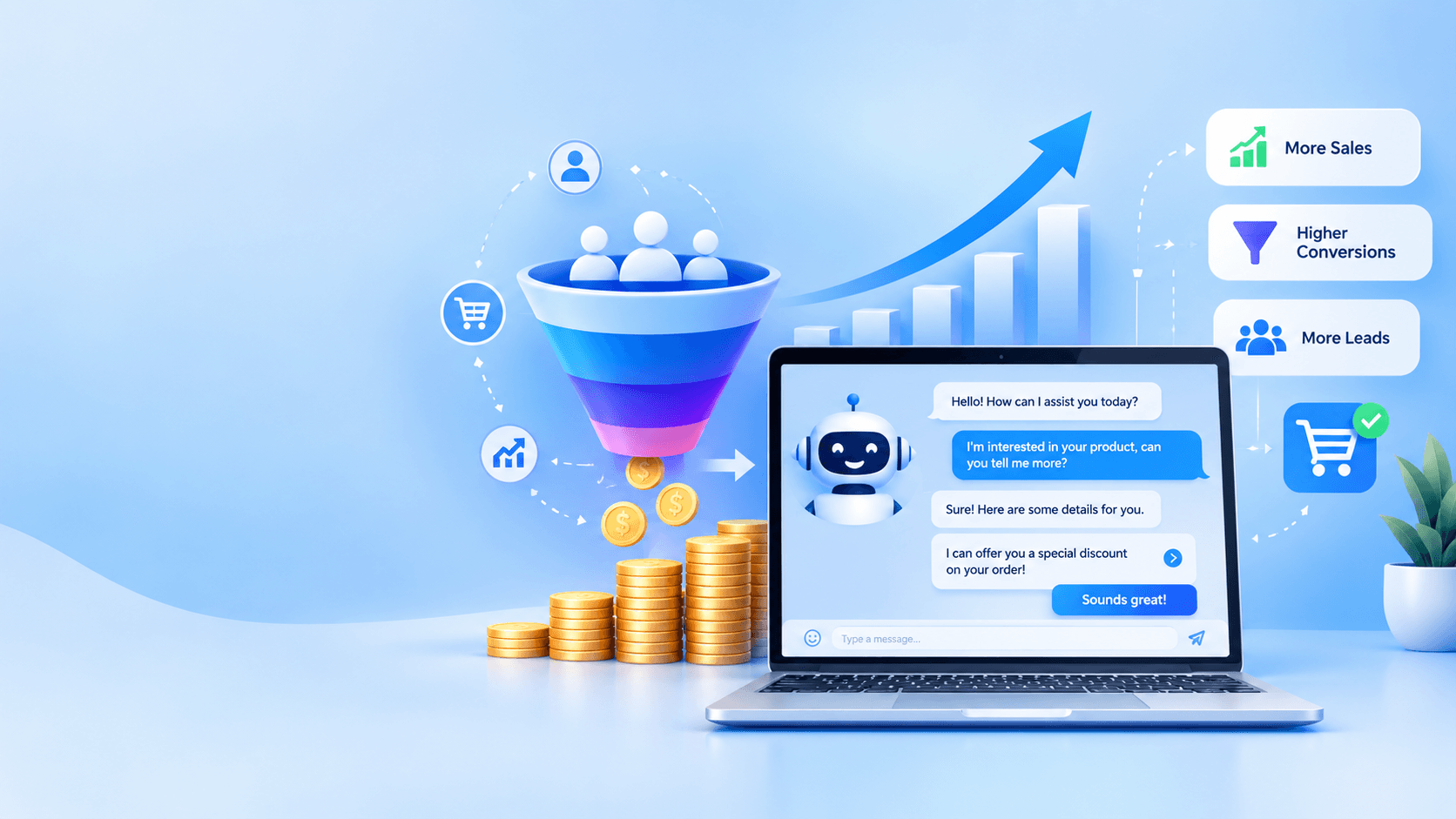
Most website visitors leave without buying anything, and most of them never come back. The gap between "interested" and "customer" is where businesses lose the most revenue, often because there's no one available to answer a question, nudge a hesitant buyer, or follow up at the right moment. A chatbot assistant closes that gap. It engages visitors instantly, answers questions, qualifies leads, and guides prospects toward a purchase all without waiting on a human to be online. For businesses trying to grow sales without growing headcount, a chatbot isn't just a support tool anymore; it's becoming a core part of the sales funnel.
What Is a Chatbot Assistant?
A chatbot assistant is an AI-powered tool that interacts with website visitors or customers in real time through text or voice. Modern chatbots, especially those built on large language models, go far beyond scripted FAQ responses. They can understand context, hold natural conversations, recommend products, book appointments, and pass qualified leads directly to a CRM or sales rep. Instead of a static contact form, an AI chatbot acts like an always-available sales assistant standing at the door of your business.
Why Sales Teams Struggle Without One
Without a chatbot, most lead capture depends on a visitor filling out a form and waiting — sometimes hours or days — for a reply. By then, interest has often cooled or the prospect has already gone to a competitor. Sales teams also lose time manually qualifying leads that were never going to convert, while high-intent visitors slip away unnoticed outside business hours. The result is a leaky funnel: traffic comes in, but very little of it turns into revenue.
How Chatbot Assistants Increase Sales and Conversions
- Instant engagement: Chatbots respond the moment a visitor lands on a page, instead of leaving them to browse alone. Faster response times are consistently linked to higher conversion rates.
- 24/7 availability: A chatbot doesn't sleep, take weekends off, or go on lunch breaks. It captures leads and answers questions at 2 a.m. just as well as at 2 p.m., so no opportunity is lost to timing.
- Lead qualification at scale: Instead of a human manually screening every inquiry, a chatbot can ask the right questions upfront — budget, timeline, use case — and route only qualified leads to sales reps, saving hours of wasted follow-up.
- Personalized recommendations: By understanding what a visitor is asking about, a chatbot can suggest the right product, plan, or service, similar to how a knowledgeable in-store associate would.
- Reduced friction in the buying journey: Chatbots can answer objections, clarify pricing, and even complete transactions directly in the chat window, removing the extra steps that cause drop-off.
- Consistent follow-up: Chatbots can automatically re-engage visitors who leave without converting, sending reminders or offers that bring them back into the funnel.
- Data-driven insights: Every conversation gives businesses visibility into what prospects are actually asking, which objections come up most, and where the funnel is losing people insights that are hard to gather from a static contact form.
Real-World Use Cases
- E-commerce: A chatbot helps shoppers find the right product, answers sizing or shipping questions, and recovers abandoned carts with a timely nudge.
- B2B SaaS: A chatbot qualifies inbound leads, answers pricing questions, and books demo calls directly onto a sales rep's calendar using an AI Sales Assistant.
- Local service businesses: A chatbot handles appointment booking and common questions after hours, so no lead is lost simply because the office was closed.
- Real estate and high-ticket sales: A chatbot pre-qualifies buyers by budget and intent before a human agent ever gets involved, saving significant time.
Chatbot vs Traditional Sales Process
Traditional lead capture relies on a form, an inbox, and a human checking it periodically response times can stretch from hours to days, and every unqualified lead still eats up rep time. A chatbot assistant responds in seconds, filters out poor-fit leads automatically, and hands sales reps only the conversations worth having through Sales Tools built for exactly this. The traditional process scales by hiring more people; a chatbot scales by simply handling more conversations at once, at a fraction of the cost.
How Aktok's Chatbot Assistant Helps
Aktok's AI-powered chatbot assistant is built directly into its business automation and CRM platform, so every conversation a chatbot has automatically becomes a tracked lead, complete with context and qualification data no manual entry required. Instead of running your chatbot as a separate tool bolted onto your website, Aktok connects it to the same system your sales team already works from, so qualified leads move straight into your pipeline and follow-ups happen automatically. That means faster response times, fewer leads falling through the cracks, and a sales team that spends its time talking to people who are actually ready to buy.
Best Practices for Implementation
- Start with your highest-traffic pages, where a chatbot can capture the most leads early on.
- Train the chatbot on real customer questions, not just generic FAQs, so its answers feel relevant.
- Set clear handoff rules for when a conversation should go to a human sales rep.
- Connect the chatbot to your CRM so every conversation is logged and actionable.
- Review chatbot conversations regularly to refine responses and catch new objections as they come up.
Conclusion
A chatbot assistant isn't about replacing your sales team it's about making sure no lead is lost to slow response times, off-hours timing, or manual bottlenecks. By engaging visitors instantly, qualifying them accurately, and feeding clean data straight into your CRM, a chatbot turns more of your existing traffic into real revenue. If you're ready to stop losing leads to silence, Aktok's AI-powered chatbot assistant can help you capture, qualify, and convert more of your visitors automatically. Get started with Aktok today.
FAQs
Does a chatbot replace my sales team?
No. A chatbot handles the repetitive, time-sensitive first-touch engagement, qualification, and answering common questions so your sales team can focus their time on qualified, high-intent conversations.
Will a chatbot feel impersonal to customers?
Modern AI chatbots hold natural, context-aware conversations rather than relying on rigid scripts, so most visitors find them helpful rather than robotic especially when the chatbot smoothly hands off to a human when needed.
How quickly can a chatbot assistant be set up?
With a platform like Aktok, a chatbot can typically be live on your site within days, since it's built to connect directly with your existing CRM and workflows rather than requiring a separate setup.