
How Chatbots Improve eCommerce Customer Experience
Introduction
Picture this: it’s 11 PM, a shopper is stuck on a checkout page, and they have one quick question about delivery time. Nobody’s online to answer. They close the tab, and you lose the sale. This happens every day in online stores, and it’s the main reason chatbots improve eCommerce customer experience so noticeably. A good AI chatbot answers instantly, guides shoppers to the right product, and keeps the conversation going when your team is offline. This guide covers how it works and how to get it right.
What Is an eCommerce Chatbot?
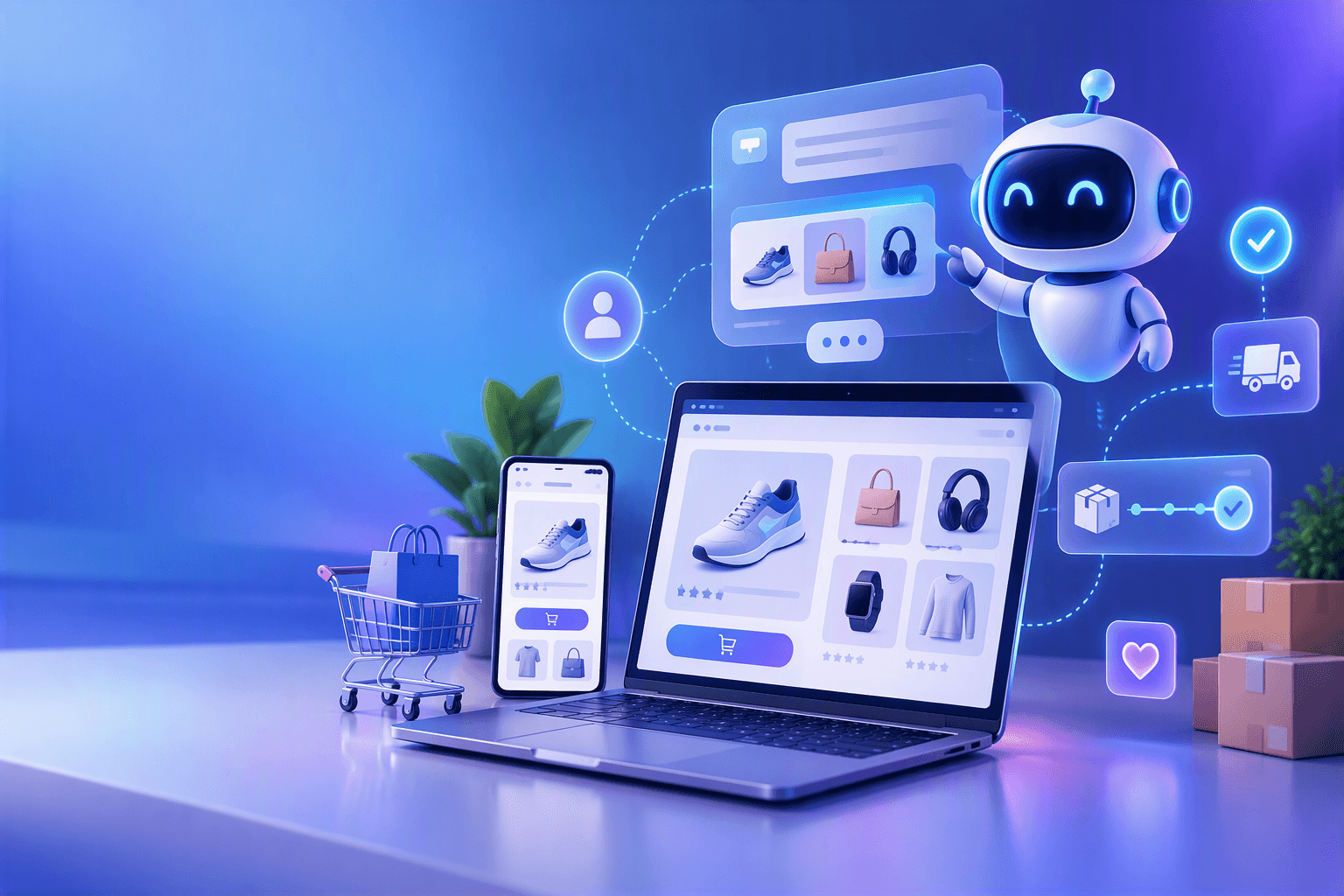
An eCommerce chatbot is software that chats with shoppers on your website, app, or messaging channels. Older bots only followed fixed scripts. Today’s AI chatbots understand natural language, so a customer can type “do you have waterproof running shoes under 3,000?” and get a useful answer. Modern platforms also connect to your CRM, which means the bot knows who it’s talking to.
Why Customer Experience Decides Who Wins in eCommerce
Online shoppers can’t touch the product or ask a store assistant. Every doubt becomes friction, and friction becomes an abandoned cart. Price matters, but speed and ease matter just as much. When two stores sell a similar product, the one that answers faster and makes buying simpler usually wins. Chatbots remove that friction at scale.
24/7 Instant Support
Your customers shop across time zones, late at night, and during sales. A chatbot handles questions about shipping, returns, sizing, and payment methods at any hour, with no waiting in a queue. Your human team then focuses on the complicated issues instead of repeating the same ten answers all day.
Personalized Product Recommendations
A chatbot can ask two or three quick questions (budget, use case, preference) and suggest products that actually fit. It works like a good store assistant who listens first. With CRM data behind it, the bot can also recall past purchases and suggest accessories or refills, which feels helpful instead of pushy. This ties directly into building a personalized customer journey.
Order Tracking and Post-Purchase Support
“Where is my order?” is probably your most common support message. A chatbot can pull tracking details and give an update in seconds, and it can also start returns or exchanges. Good post-purchase support builds trust, and trust brings repeat customers.
Recovering Abandoned Carts
Shoppers leave carts for many reasons: surprise shipping costs, unanswered questions, or simple distraction. A chatbot can step in at the right moment, answer the doubt, or send a gentle reminder through WhatsApp or email. It works best when it helps rather than nags, so offer an answer first and a discount only if needed. Pairing this with marketing automation lets you follow up with the right message at the right time.
Smarter Lead Capture and Customer Data
Every chat is a chance to learn what customers want. Chatbots can collect names, emails, preferences, and common objections, then send that into your CRM automatically. Over time, this shows you which products confuse people, which pages cause drop-offs, and what to fix. Adding workflow automation keeps follow-ups from slipping through the cracks.
Smooth Human Handoff
Chatbots shouldn’t try to handle everything. Angry customers, payment disputes, and unusual requests need a real person. The best setups pass the full chat history to your agent so the customer never repeats themselves. This one detail often separates a helpful bot from a frustrating one.
Multilingual and Omnichannel Support
If you sell across regions, language is a real barrier. An AI chatbot can respond in multiple languages and stay consistent across your website, WhatsApp, and social inboxes. Customers get the same quality of help wherever they message you.
How to Choose the Right eCommerce Chatbot
Look for these basics:
- Integration with your store platform (Shopify, WooCommerce, or custom)
- CRM connection so conversations become customer records
- Easy human handoff
- Analytics that show resolved chats, drop-offs, and sales influenced
- A setup that doesn’t need a developer for every change
An all-in-one platform like Aktok saves you from juggling separate tools for chat, CRM, and automation.
Common Mistakes to Avoid
- Hiding the human option, which frustrates customers fast
- Writing robotic, overly long replies
- Launching without testing real customer questions
- Ignoring chat data after launch
- Using pop-ups so aggressive they block the shopping experience
Start with your top five customer questions, train the bot on those, and expand from there.
Conclusion
Chatbots improve eCommerce customer experience by being fast, available, and useful at the exact moment a shopper needs help. They cut repetitive support work, recover lost sales, and give you clearer insight into what customers want. The key is balance: let automation handle the routine and keep humans for the moments that matter. Ready to build a smarter shopping experience? Explore Aktok’s AI chatbot and see how it fits your store.
FAQ
1. How do chatbots improve eCommerce customer experience?
They give instant answers, recommend relevant products, track orders, and recover abandoned carts, all without making customers wait for a human agent.
2. Are chatbots good for small online stores?
Yes. Small teams benefit most because a chatbot handles repetitive questions around the clock, so the owner isn’t answering the same messages all day.
3. Can a chatbot increase sales?
It can. By answering doubts at checkout, suggesting suitable products, and following up on abandoned carts, a chatbot removes the common reasons shoppers leave.
4. Will a chatbot replace my customer support team?
No. It handles routine questions, while your team handles complex or sensitive issues. The two work best together.
5. What’s the difference between a rule-based and an AI chatbot?
A rule-based bot follows fixed scripts and only understands set options. An AI chatbot understands natural language and handles varied questions more flexibly.
6. Can chatbots work on WhatsApp and social media?
Yes. Many platforms support WhatsApp, website chat, and social inboxes from one dashboard.
7. How long does it take to set up an eCommerce chatbot?
A basic bot can go live in a day or two. Training it on your products, policies, and common questions takes longer, but it’s worth doing properly.

Helping thousands of small businesses succeed every day
Get 24/7 access to Aktok's AI Chatbot that automates Customer support, captures leads, and manages conversations
Learn More